
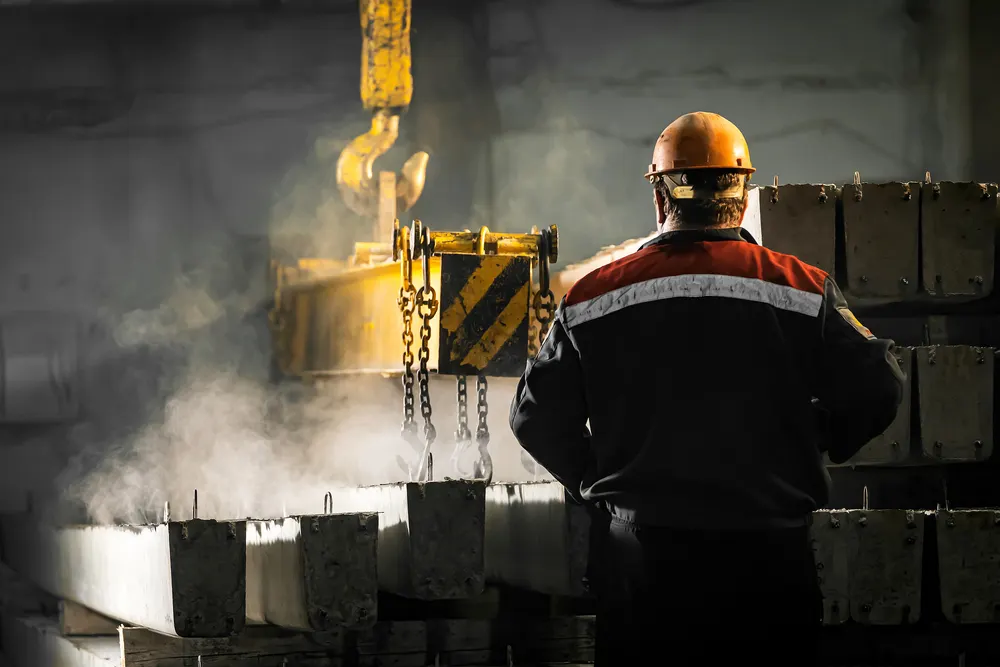
Forklifts, overhead cranes, hoists and slings lift tonnes of load every day. An unexpected failure of a chain, hook or brake can cause serious accidents. In Türkiye, periodic inspection of lifting equipment is therefore a legal duty of the employer. This article explains how often, by whom and how the inspection must be done, based on the Regulation on Health and Safety Conditions in the Use of Work Equipment as amended on 23 December 2025, and gives a practical checklist for use on site.
Which Equipment, and How Often?
Table 2 of Annex III of the regulation lists lifting equipment and the maximum inspection intervals. Unless the relevant standard sets a different period:
- Cranes (overhead, gantry, mobile, loader, tower, offshore, slewing jib and similar): at most 1 year
- Hoists and lifting gear (monorail, pulling, tensioning and similar): at most 1 year
- Industrial trucks (forklifts, pallet trucks, variable-reach trucks, order pickers and similar): at most 1 year
- Lifting accessories (slings, clamps, vacuum and magnetic lifters and similar): at most 1 year
- Vehicle lifts, lifting tables, mobile elevating work platforms, conveyors, manipulators, escalators: at most 1 year
- Building scaffolds: at most 6 months
These are maximum intervals. A risk assessment that considers the equipment’s age, intensity of use, environment and previous results may require more frequent inspections. Building lifts are covered not by this table but by a separate regulation on the periodic inspection of lifts.
When Else Is an Inspection Required?
Under Article 7 of the regulation, a periodic inspection is also required:
- After installation and before first use, where safety depends on installation and assembly conditions
- After major maintenance and repair
- For stationary equipment, every time it is relocated
- For tower cranes and similar, after first erection and after every climbing or modification
- After events that may compromise safety, such as accidents, natural events or long periods out of use
Load Test: What Load, How Often?
Unless the standards state otherwise, an examination is carried out at every periodic inspection, and the load test is applied at two levels:
- At every periodic inspection (at most once a year): a load test at the working capacity, or at the rated lifting capacity if no working capacity has been set.
- At least every three years and after every major maintenance and repair: a load test that verifies structural integrity, applying a coefficient to the rated lifting capacity.
Where the Ministry has not published a document specific to the equipment, the authorised inspector sets the test load after assessing the relevant standards and the equipment’s working principle. As a general rule, the static test coefficient is 1.5 for manually operated equipment and accessories and 1.25 for all others, and the dynamic test coefficient is 1.1.
One detail to note: equipment used below the lifting capacity on its nameplate must have its working capacity clearly marked. If a load above the working capacity is to be lifted, the equipment may not be used until it has been tested for that load.
Who May Carry Out the Inspection?
The inspection must be done by an authorised person registered in EKİPNET, the Ministry of Labour’s register of periodic inspectors. For lifting equipment (except scaffolds), the eligible professions are mechanical, mechatronics, metallurgical and materials and manufacturing engineers, technical teachers with a mechanical or metal education background, and mechanical technicians. Scaffolds are inspected by civil and mechanical engineers and the related technical teachers and technicians.
- İSG-KATİP contract: a contract must be signed and approved in İSG-KATİP, the Ministry’s online OHS platform, at least 1 day before the inspection. Reports without a contract are invalid.
- Maintenance and inspection must be separate: a person who maintains a piece of equipment may not carry out its periodic inspection.
- Accreditation: periodic inspections of tower cranes, escalators and suspended access equipment may only be carried out by authorised persons working for an equipment inspection body. From 1 January 2027, the list also covers mast climbing work platforms and powered lifting platforms for people with impaired mobility.
Forklift Checklist
Inspections are carried out against standards such as the TS EN ISO 3691 series and FEM 4.004. The main check points are:
- Forks: wear, cracks, bending and the locking mechanism. Fork arm inspection is based on ISO 5057.
- Mast and chains: chain elongation, wear, lubrication, connecting pins and play in the mast channels.
- Hydraulic system: lift and tilt cylinders, hoses and leaks.
- Brakes and steering: service and parking brakes, steering play.
- Safety equipment: overhead guard, seat belt, horn, lights and reversing alarm.
- Capacity plate: legible and correct for the attachment fitted.
- Load test: according to the rules above.
Crane and Hoist Checklist
- Hook: increased throat opening, deformation, cracks and the safety latch. If a crack is suspected, magnetic particle testing is one of the most reliable methods.
- Wire rope: broken wires, wear, crushing, corrosion and birdcaging. Discard criteria for wire ropes follow ISO 4309.
- Brakes: holding performance of the hoist, travel and trolley brakes.
- Limit switches and overload limiter: upper and lower hoist limits, end-of-travel limits and overload protection.
- Structure: deformation of girders and connections, loose bolts and cracked welds.
- Rails and travel system: rail alignment, buffers and wheels.
- Controls and electrics: emergency stop, control buttons and markings.
- Capacity plate: the lifting capacity must be visible from all working positions.
Lifting Accessories: Slings, Chains, Clamps
Slings, chains and clamps are often overlooked, but they are subject to periodic inspection too. Textile slings with illegible labels, cuts, crushing or excessive wear, chain links that are elongated or deformed, and cracked hooks must be taken out of service.
The Role of Non-Destructive Testing
The regulation states that non-destructive testing may be carried out in addition to the examinations and tests in the periodic inspection of lifting equipment, with the NDT reports kept as annexes to the periodic inspection report. NDT gives valuable information especially in these cases:
- Magnetic particle or liquid penetrant testing for surface cracks in hooks, shackles and pins
- Visual and ultrasonic testing of welds in crane girders and connections
- Early detection of fatigue cracks in old or heavily used equipment
Non-destructive tests must be performed by personnel certified to at least Level 2 under TS EN ISO 9712.
The Report and a “Not Suitable” Result
At the end of the inspection, a periodic inspection report is issued with the inspector’s EKİPNET number and signature. It states the start date of the next inspection and clearly says whether the equipment may be used. If the result is “not suitable”, the equipment may not be used until the defects are corrected and a visible warning must be placed on it; after correction, a second inspection is carried out and a new report issued. We explain report contents and record-keeping rules in detail in our pressure vessel periodic inspection article; the same rules apply to lifting equipment.
Daily Checks Are the Operator’s Job
Periodic inspection happens once a year, but the equipment is used every day. Under the regulation, the operator must check the equipment visually for cracks, loose connections, deformation, wear and corrosion and test its functions before each use. These checks must be recorded. Equipment showing cracks or excessive wear is taken out of service immediately and submitted for periodic inspection.
Frequently Asked Questions
How often must a forklift be inspected?
Industrial trucks such as forklifts and pallet trucks must be inspected at least once a year, unless the relevant standard sets a different period.
What load is used for a crane load test?
At every periodic inspection, the working capacity (or the rated lifting capacity if no working capacity has been set). At least every three years and after major repairs, a coefficient is applied to the rated capacity: as a general rule 1.25 for the static test (1.5 for manually operated equipment) and 1.1 for the dynamic test.
Do slings need periodic inspection too?
Yes. Lifting accessories such as slings, clamps and vacuum and magnetic lifters are listed in Table 2 and must be inspected at least once a year unless the standard sets a different period.
Who is responsible for inspecting a rented forklift or crane?
The employer using the equipment at the workplace must make sure it has a valid periodic inspection report. Mobile equipment used away from the site must carry its latest periodic inspection report with it.
Conclusion
Safety in lifting depends on periodic inspections at the right interval, regular load tests and operators’ daily checks. FKT NDT carries out periodic inspections of lifting equipment, and the related non-destructive tests, on site. Contact us to plan the inspection schedule for your equipment.
This article is based on Türkiye’s Regulation on Health and Safety Conditions in the Use of Work Equipment (Official Gazette 25.04.2013/28628) as amended in Official Gazette 33116 of 23.12.2025. Legislation may change; the current Turkish text is available at mevzuat.gov.tr.