“How much does weld inspection cost?” is one of the questions non-destructive testing (NDT) companies hear most often. The short answer: it depends on the job. Two inspections with the same method can cost very different amounts depending on the volume of work, the material, site conditions and the reporting required. This article explains the main factors that determine the cost of NDT, the pricing models common in the industry, and the information you should prepare to get an accurate quote.
1. Inspection Method
Each method differs in equipment, consumables, staffing and time:
- Visual testing (VT) is the simplest and fastest method and is usually done before the others.
- Liquid penetrant (PT) and magnetic particle testing (MT) find surface defects. They use consumables, and the time needed depends on the size of the surface.
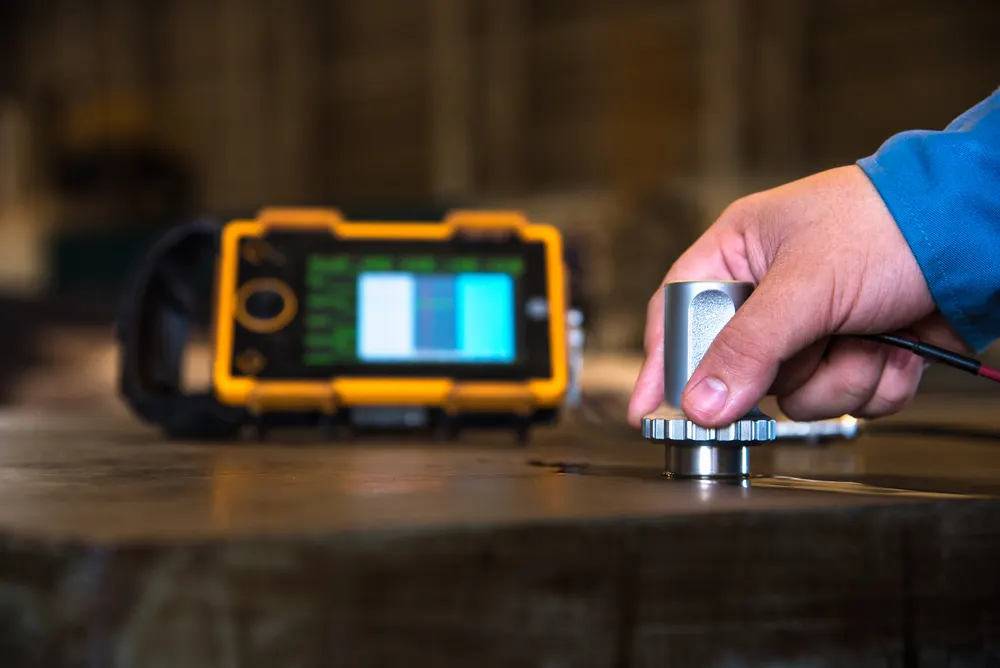
- Ultrasonic testing (UT) gives results immediately but requires experienced, certified personnel. Thickness and joint type affect how long it takes.
- Radiographic testing (RT) requires film or digital imaging, radiation safety measures and often work outside normal shifts.
The choice of method usually depends on the project specification. For the differences between ultrasonic and radiographic testing, see our article Ultrasonic or Radiographic Testing?
2. Volume of Work
The factor with the biggest effect on cost is how much work there is to inspect:
- Number of welds or total weld length (metres)
- Pipe diameters and number of joints
- Number of films or images in radiography
- Inspection extent: all welds, or a percentage set by the specification?
As the volume grows, fixed costs such as mobilisation are spread over more work, so the unit cost usually falls.
3. Material, Thickness and Geometry
- Thickness: in radiography, exposure time grows with thickness. In ultrasonic testing, thick sections need more scanning.
- Material: coarse-grained materials such as austenitic stainless steel welds and castings make ultrasonic testing harder and may need special techniques or probes.
- Geometry: T-joints, nozzle connections and small-diameter pipes take longer than straight butt welds.
4. Site Conditions and Access
Inspecting the same weld can take very different amounts of time in a workshop and on site:
- Work at height, and the need for scaffolding or a mobile elevating work platform
- Confined spaces (inside tanks or boilers) and their permits to work
- Cleaning and grinding the surface before inspection, and who does it
- Site entry procedures, safety inductions and waiting time
5. Location and Mobilisation
The distance between the site and the inspection team determines travel, accommodation and equipment transport costs. On jobs lasting several days or weeks the team stays on site, while on short one-off jobs mobilisation becomes a larger share of the cost. Grouping several inspections into one visit reduces it.
6. Working Hours and Urgency
- Night and weekend work: radiography needs a safety zone, so it is often done between shifts or at night.
- Maintenance shutdowns: when a lot of work must fit into a short shutdown, a larger team or 24/7 working may be needed.
- Urgent jobs: an unplanned breakdown or a tight shipping date means a team and equipment must be freed up at short notice.
7. Standard, Personnel and Reporting Requirements
- Applicable standard and acceptance criteria: EN ISO, ASME or client-specific specifications determine the inspection technique and the scope of the report.
- Personnel qualification: inspections are carried out by personnel certified to ISO 9712. Some projects require a specific level or Level 3 approval.
- Procedures and approvals: preparing a project-specific inspection procedure, or obtaining client and third-party approvals.
- Report format: client-specific report templates, reports in English, weld maps or traceability lists.
- Re-inspection after repair: re-testing welds that were rejected and repaired.
Common Pricing Models
NDT is usually priced in one of these ways, or a combination:
- Unit price: per film, per weld (joint) or per metre of weld.
- Day rate: per day of personnel and equipment on site; common when the volume of work is not known in advance.
- Lump sum: a total price for a clearly defined scope.
- Extras: mobilisation, accommodation, night work and waiting time may be listed separately.
When comparing quotes, look not only at the total but at what is included: are the report, re-inspection, mobilisation and consumables in the price?
What to Send for an Accurate Quote
The clearer the following information, the more accurate the quote and the fewer surprises on site:
- Description of the job: fabrication, installation, maintenance or periodic inspection
- Required methods and inspection extent
- Materials and thicknesses; for pipes, diameters and wall thicknesses
- Number of welds or total weld length
- Applicable standard and acceptance criteria, or the specification
- Drawings, weld maps and WPS, if available
- Site address and access conditions
- Required start date and duration, and whether night or shutdown work is needed
- Any specific requirements for report language and format
Tips to Reduce Cost
- Prepare the surfaces: having the welds cleaned in advance cuts waiting time on site.
- Group the work: combine several small jobs into one visit.
- Arrange access in advance: have scaffolding, platforms and permits ready before the team arrives.
- Plan early: scheduling shutdown work and radiography in advance avoids urgent-job costs.
- Share the specification up front: when acceptance criteria and reporting requirements are known from the start, there is no rework.
Frequently Asked Questions
Why don’t you have a standard price list?
Because two jobs with the same method can cost very different amounts depending on volume, thickness, site conditions, working hours and reporting requirements. A fixed list would mean overpricing some jobs or quoting an incomplete price that leads to extra costs on site. That is why we price each job on its own details.
Is choosing the cheapest quote risky?
It can be. Differences between quotes often come from scope. Always compare personnel certification to ISO 9712, equipment calibration, report content and whether re-inspection is included. A wrong inspection result can cost far more than the inspection itself.
How long does it take to prepare a quote?
When the information is complete, a quote is usually prepared quickly. For jobs with an unclear scope, a preliminary meeting or site survey gives a more accurate result.
Do you send a team for small jobs?
Yes. On small jobs mobilisation can be a significant part of the total cost, so where possible we recommend grouping work into the same visit.
Conclusion
The cost of non-destructive testing is set as much by the volume of work, material, site conditions, working hours and reporting requirements as by the method itself. An accurate quote starts with accurate information. At FKT NDT we assess your job on this basis and give you a clear quote. Browse our non-destructive testing services or contact us with the details above to request a quote.